Charter · Version 3.5 · 23 October 2026
The My-E-Brand Charter
Alvin and Hendriena (“Rina”) van As · Plain English edition
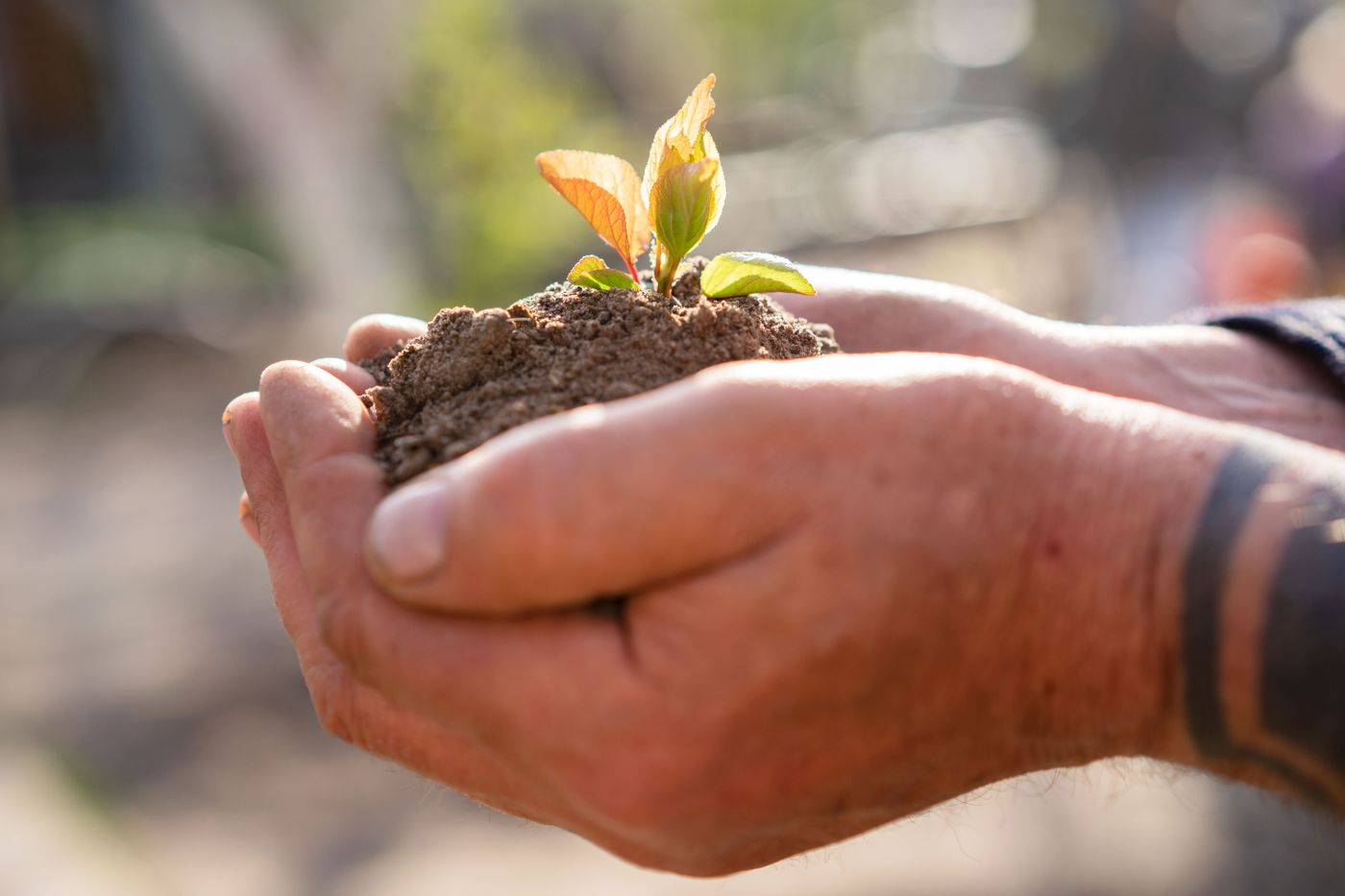
Photo: Atlantic Ambience, via Pexels.
In this Charter
- Before anything else
- Why we wrote this
- One — Orphans and street children
- Two — Elders
- Three — Rivers and oceans
- Four — Forests
- The longer vision
- What we believe
- The engine
- Where we actually stand — read this twice
- Who is behind this
- How to get involved
- Where the words come from
- Where the numbers come from
- One paragraph — for sending to anyone
“Let’s make the world a better place. I own it.”
“Let’s stop the blame game — let’s fix it rather than that’s your fault.”
Before anything else
First: why the world is like this.
There is a video of a professor who throws a student out of his lecture room for no good reason. Her name is Alexis. Nobody in the room says a word. Then he turns on the class: you all watched, and you all stayed silent. That silence is the lesson.
A man named Jafar Ershadi Fard shared it with these words: “Injustice grows when good people decide that someone else’s suffering is not their problem.” And: “Justice is not only the responsibility of judges, leaders, or institutions. It belongs to all of us.”
That is how four things got broken. Not by villains. By silence.
Second: what you actually hold.
“Words have power, words are power, words could be your power.” “Your mouth can spit venom or it can mend a broken soul.” — Mohammed Qahtani, Toastmasters World Champion of Public Speaking, 2015
In that speech, Qahtani tells of his friend Nasser, who worked for years to make his father proud. When he finally rang home with straight A’s, his father said two words — “I’m busy” — and hung up. Nasser never recovered. He died of an overdose. The one person who mattered said the wrong two words, and a single kind one could have saved his life.
You hold that power too. It costs nothing.
Third: what it takes.
Sometimes all you need is one person on your side.
Not a crowd. Not a government. Not a billionaire. One person. An orphan or a street child needs one. An elder needs one to hand a lifetime to. A river needs one to stop the plastic before it reaches the sea. A forest needs one to plant three trees and put their name on them.
You could be that person. Read on.
Why we wrote this
Four things in this world are broken. None of us built them. All of us live in them. So they are ours to fix.
This is not a charity asking for money. We are a small family business based in Australia, run by two people — Alvin, born in South Africa, and Rina, his wife and partner in business. We decided to stop waiting for someone else to go first.
Here is the whole plan in three lines. We build and sell real products. The money those products make pays for the fixes. So the fixes never have to beg.
Below are the four things we have decided to own. They are in this order for a reason, and the order never changes.
One — Orphans and street children
Somewhere tonight an orphan or a street child is working out which doorway is safest to sleep in. Not a statistic. One child. A name. A favourite colour. A plan for the night.
There are more than five million children like that living in institutions right now, and most of them are not orphans. Around eight in ten have a living parent who could not keep them — because of poverty, illness, or nobody to help. Tens of millions more are street children, living on the streets.
Here is what most people never learn. The only proper scientific test ever run on this — 136 children in Romania, followed for twenty years — proved that growing up in an institution physically changes a child’s brain. It also proved that a real family, early, gives most of it back. Not all. Most. The earlier the child gets a family, and the longer they keep it, the better they do.
And when the system runs out the clock and sends a young person out alone at eighteen, between a third and a half of them will be homeless before they turn twenty-six. That is not because they are broken. It is because we handed them a life with no family behind it and called it independence.
We are not building an orphanage. Orphanages are the problem. We build family.
Our homes are simple and specific. Each home is tied to a community hall, so an orphan stays part of a community instead of being locked away from one. In the hall, children who need a home, young people at risk of crime or drugs, and elders meet each other first. When a real bond forms between an elder and a child, they share a home. No more than two or three young people live with one elder or elder couple, so no one is overwhelmed — a household, not a dormitory. Every orphan gets their own bedroom and their own bathroom. Every bedroom is the same size, so no orphan learns jealousy from the walls around them. Emergency buttons sit beside every bed and through the house, wired straight to a hospital. Every orphan is tested to find what they are naturally good at, given a solid grounding in maths, physics and a language, and then set free to specialise in what they do best. Orphans are not raised to obey a workplace. They are raised to think.
We want these homes to stand up to fire and flood. That is a design goal we are working toward, not something we have built or tested yet — and we say so.
Two — Elders
Picture one man. Fifty years a builder, or a nurse, or a farmer. Someone who knows how things are actually made, grown, fixed and held together. Now picture him in a chair in a facility, spoken to like a task, waiting. He is carrying sixty to eighty years of knowledge and there is nobody left to hand it to.
In June 2025 the World Health Organization put a number on this. One person in six on this planet is lonely. Loneliness is linked to about a hundred deaths every hour — more than eight hundred thousand a year.
We treat old age as storage. We move the people who built the world into rooms designed to keep them quiet until they die, and we call it care.
Here is the honest state of the evidence. Programmes that bring the old and the young together look promising, but there are not many good studies yet, and the one that clearly worked was the one that ran for a full year — long enough for a real relationship to form. That is exactly what a shared home does. It does not run for an afternoon. It runs for a childhood.
Elders come second on this list for one reason: they are the answer to the first problem. An orphan needs a family. An elder has a lifetime to give and nobody to give it to. Put them under one roof and each one fixes the other.
Three — Rivers and oceans
There is plastic in your blood. Not a figure of speech. Scientists tested the blood of twenty-two healthy adults and found plastic in seventeen of them. Another study found plastic lodged in the artery walls of heart patients, and those patients were four and a half times more likely to have a heart attack, a stroke, or die within the next three years. The scientists are careful to say that does not yet prove the plastic caused it. We are careful to say the same. But it is in us, and pretending otherwise is not an option.
It gets there through water. Just over a thousand rivers carry about eighty per cent of the plastic that reaches the sea — up to nearly three million tonnes a year. The rivers are the arteries. The ocean is the body. And both of them now run through ours.
That is why we start with pilot clean-ups of rivers and dams. A river is damage still small enough to stop, and a job a person can actually finish. Then the coast. Then the ocean.
Several of our inventions exist to catch waste in the water and turn waste back into something useful on land, before it ever reaches a river. They are products people buy — not a clean-up fund people are asked to donate to.
Four — Forests
Start with the truth, because the popular story is wrong. Forests are not “the lungs of the earth.” A grown forest breathes in about as much oxygen as it breathes out. What a forest really does is two things: it stores carbon, and it makes rain.
The Amazon’s trees pump something like twenty billion tonnes of water into the sky every single day. That water falls as rain on farms thousands of kilometres away. Cut the forest down and you do not run out of air. You run out of rain — and you let loose decades of stored carbon all at once.
In 2024 the tropics lost a record 6.7 million hectares of old-growth forest — an area nearly the size of Panama, at a pace of eighteen football fields a minute. For the first time ever, fire did more of the damage than farming. Scientists now say that by 2050, somewhere between a tenth and nearly half of the Amazon could be pushed to the point where it stops being a forest.
And here is the part that matters most. Worldwide, the rate of forest clearing has been falling for thirty years — from about seventeen and a half million hectares a year in the 1990s to under eleven million now. Direction can change. Effort works. That is the whole reason to try.
Our rule on trees is simple. For every tree cut down, the person responsible owns its replacement: three trees planted and cared for for ten years. Not an offset. Three trees, ten years, your name on them. If you cannot plant and tend them yourself, you pay someone to do it, and the trees are still yours to answer for.
And we hold everyone to account — governments, companies and ourselves — until the balance between people, animals and plants is restored to a level we can all agree is sustainable.
Forests come last on this list — not because they matter least, but because a world that will not protect one orphan or street child will never hold the discipline to protect a forest.
The longer vision
These are design ideas. Nothing here is built, funded or tested yet, and we say so.
A city built for every age. Our homes are the first step. The next is whole communities designed around the same idea, run by middle-aged professionals, so the young, the old and the people in between each have a part to play.
Roads that keep people apart from danger. Separate lanes that never cross: one for wheelchairs, one for roller blades and bicycles, one for walking and running, and others for motorbikes, trucks and cars. Ambulances and emergency vehicles may use any lane and return to their own. The aim is that a child, an elder and a wheelchair user can all get around safely.
All children, not only some. We want every child raised to be responsible, highly intelligent and motivated. We start with the children who have no one, because they need it most, and we do not stop there.
What we believe
These are our own words, and every draft that has ever dropped them was wrong to.
No one in this world needs to go hungry, or to be without a roof over their head and a decent bed to sleep in.
Look past each other’s weaknesses. Cultivate and nurture each other’s strengths. The weaknesses tend to disappear on their own.
We are all one family. Let’s live like that.
Believe in whatever supreme being you believe created us — but no one has the right to force their beliefs on anyone, or to punish anyone for holding different ones.
Stop the wars and the killing. Spend three per cent of each country’s GDP on education instead of war, or we will not grow up as a species.
Join forces. Countries, companies and individuals who think like this are stronger together than any one of us alone, and we want to find them.
No system is perfect. Take the best of what works, drop what does not, and build a way of life that is a win for everyone.
We believe humanity will one day live beyond this planet. That is the reason to learn to look after one another and the Earth, not a reason to reduce our numbers. A species that cannot manage itself will not survive the journey.
The engine
We hold thirty inventions at different stages, all connected to one shared platform. We are not going to list their workings here, because the workings are not the point. The point is this: the inventions pay for the mission. They are not a separate charity. They are the reason the charity is not needed.
Every product name starts with “My” wherever it fits — My Cap, My Bread Bin, My Power Bank — because ownership is the whole idea. You already say “where’s my keys” a hundred times a day. We want you to say it about the solution.
Where we actually stand — read this twice
We will tell you exactly where we are, as of 23 October 2026, because a mission built on honesty cannot make its first exception about itself.
- My LED Safety Cap — design finished, factory-ready parts list built. Physically, only a single-zone test module and hand-built battery pods exist. No full prototype. No patent filed. No revenue from this product.
- My Cap Companion Power Bank — Rina’s idea. Design finished, engineering record still being written.
- Affiliate Marketing With AI For Beginners — our first book. Published and on sale.
- Money — no revenue from any of the inventions yet. The partnership does earn real, verified trading revenue from services, run day to day by Rina. We say both halves because both are true.
- Seed target: one million Australian dollars. Not a guess. A bottom-up build-up from real, itemised costs — protecting the ideas, building prototypes, safety certification, tooling, a first production run of 6,700 units, travel, hardware, software, legal and shipping — with a paper trail behind every line.
We put that here, right after the plan, on purpose. Anyone can claim patents and prototypes they do not have. We have watched people do it. We would rather tell you we have not filed a patent than tell you we have.
Our rule has three words: real, or not said at all. We would rather be small and true than big and false.
Who is behind this
Alvin van As. Born in South Africa, now living in Australia. Alvin cannot stand watching people suffer when a small, cheap thing could have helped: a way to signal for help, something to keep a person afloat, a light in the dark. His whole passion is the same one thing: to build those small things, and to stop waiting for someone else to build them. He is not waiting for permission, a donor, a government or the world to agree with him first. He owns it.
Hendriena “Rina” van As. Co-founder. The idea behind the Cap Companion Power Bank was hers. She ran the business day to day — the invoices, the customers, the trading revenue we can show you. She is not a silent partner. She is the reason the business has earned anything at all.
How to get involved
Nobody is coming to fix this. Not a government. Not a billionaire. Not the next generation. It is us or it is nobody.
Here is how you get in — at whatever level your time and money allow. You can step in when you can and step back when life changes. That is how a closed loop works.
Buy. Every product with “My” on the front pays for the mission. When My LED Safety Cap is ready, the first 6,700 buyers are the people who turn the engine on. Every buyer who wants to be named can ask to go on the Hero Board.
Give. https://www.gofundme.com/f/my-e-brand-lets-make-the-world-a-better-place-I-own-it — every dollar goes to the itemised list: protecting the ideas, the first prototype, safety certification, the first production run. The itemised list is available to anyone who asks, so you can see where your money went.
Volunteer your hands or your head. We need mechanics, electricians, welders, engineers, scientists and botanists — people who can help design the microplastic filters, build the river-cleaning machines, plant and care for trees, and one day sit beside an orphan or an elder. An hour a month or a year of your life. The sign-up form is live on the Volunteer page. Say what you can do and when, and step back whenever you need to.
Invest. The seed is one million Australian dollars, built from real, itemised costs. A serious investor gets the full cost build-up and the engineering record under a confidentiality agreement. We will not show you a five-year profit forecast, because we do not have one that is real. What you get instead: an honest line of sight to the first product; equity in the company that will own the inventions — the partnership becomes a company at the first investment, and that is written into the plan; and, if you choose, your name on the Investor Hero Board for as long as My-E-Brand exists. Write to us through the Contact link at the foot of this page.
Share. Send this to one person who will read it. It is the smallest job on this list, and it is not small.
Recognition. The Hero Board has a page for each group of people: donors and volunteers now, with partners and investors to follow. Everyone who chooses to be named is named, permanently. Donors are added only after we match their gift and they say yes; nobody is named without agreeing, amounts are never shown unless the donor chooses, and no one is ranked by the size of a gift. Anyone who wants to stay anonymous stays anonymous. The Founders page is for the two of us, Alvin and Rina, and no one else. Nothing is put on it until it is real: the counters start at zero and only move when something actually happens.
We are not asking you to save us. The work has started. The plan is costed. The founders are real. The door is open.
Let’s make the world a better place. I own it.
Alvin and Rina van As — https://my-e-brand.com
Where the words come from
- The professor and Alexis — video shared by Jafar Ershadi Fard on LinkedIn, “The Silence That Allows Injustice”. The quoted lines are his own caption. The professor is not named here because the video’s origin has not yet been verified to a primary source.
- Mohammed Qahtani — “The Power of Words,” winning speech, Toastmasters International World Championship of Public Speaking, 2015. Transcript: https://speakola.com (search “Qahtani”). Shared on LinkedIn by Murat Aydin.
- “Sometimes all you need is one person on your side” — post by Pradeep Kumar K on LinkedIn (video credited @PICKUPLINES).
Where the numbers come from
Every figure above is checkable. This page is for anyone who wants to check.
- More than five million children in institutions — Desmond et al., The Lancet Child & Adolescent Health, 2020 (median estimate 5.37 million; range 3.18–9.42 million). UNICEF separately counts at least 2.7 million in residential care from official records (2017) and calls it an undercount. Different methods; both presented.
- Around eight in ten have a living parent — Lumos Foundation; Hope and Homes for Children; Bunkers et al., 2014.
- 136 children in Romania — Bucharest Early Intervention Project. Nelson et al., Science, 2007; King et al., American Journal of Psychiatry, 2023.
- A third to a half homeless by twenty-six — Dworsky, Napolitano & Courtney, American Journal of Public Health, 2013 (31–46%).
- One in six lonely; a hundred deaths an hour — WHO Commission on Social Connection, From loneliness to social connection, 30 June 2025 (~871,000 deaths a year).
- Evidence on old-and-young programmes — Whear et al., Campbell Systematic Reviews, 2023; Campbell et al., Campbell Systematic Reviews, 2024.
- Plastic in seventeen of twenty-two people — Leslie et al., Environment International, 2022.
- Four and a half times more likely — Marfella et al., New England Journal of Medicine, 2024 (hazard ratio 4.53 over 34 months; association, not proven cause; see NEJM Correspondence, 9 May 2024).
- A thousand rivers, eighty per cent — Meijer et al., Science Advances, 2021 (0.8–2.7 million tonnes a year).
- Twenty billion tonnes of water a day — Antonio Donato Nobre, The Future Climate of Amazonia, 2014 (an estimate from modelling).
- 6.7 million hectares lost in 2024; eighteen football fields a minute — Global Forest Watch / University of Maryland, May 2025 (6.7 million ha of primary tropical forest, 2024).
- A tenth to nearly half of the Amazon by 2050 — Flores et al., Nature, 2024 (10–47% exposed to disturbance capable of triggering transition — a projection of risk, not a prediction of collapse).
- Forest clearing falling for thirty years — FAO Global Forest Resources Assessment 2025 (17.6 million ha/yr in 1990–2000 to 10.9 million ha/yr in 2015–2025).
One paragraph — for sending to anyone
We are Alvin and Rina van As, a small family business based in Australia. Four things in this world are broken — orphans and street children with no one, elders with no one to hand their lives to, plastic in our rivers and now in our blood, and forests being cut faster than they can grow back. None of us built that. All of us live in it. So we are fixing it, in that order, and we are paying for it ourselves: we build and sell real products, and the profits fund the fixes, so nobody has to beg. We have not filed a patent yet, and we have not built a full prototype yet — we say so, because our rule is real, or not said at all. This is not a cry for help. It is an invitation to own a piece of the fix. Let’s make the world a better place. I own it.
Share this with one person
One share is how this reaches someone we cannot. Every button is free to use.
Find us: Website · GoFundMe · Ebook bundle